Thursday, July 8, 2010

...and they did it!

Orphan youths successfully climb Kuari Pass


Like the famous one-liner of an international sports goods company that says, “Just do it!’ …. a small group of 15 orphaned boys and girls from Mysore, Pune and Tamil Nadu did precisely that. The orphans, joined by a supporting team of trekkers, trekked to Kuari Pass summit in Uttar-khand’s section of Himalayas. Kuari Pass trek is popular for the Himalayan peaks of Nanda Devi, Kamet, Mana, Trisul, Dunagiri, Bethartoli and others. The trek began on April 25 and concluded on May 14.

It may be recalled that SOM had published an article (SOM dated March 24) about the proposal to take orphaned boys and girls on a trek to foot of the Himalayan range. The trek for these orphans was organised by the City based, International Academy of Mountaineering and Allied Sports (IAMAS), and Society for Trekking and Environmental Preservation (STEP), New Delhi.

The happy trekkers are K.D. Devendra and Mahadeva Swamy from JSS, Suttur, Siddarth Bapu from Grace School, Kumbarakoppal, Anitha, Kavya and Shruthi from Bapuji Children’s Home, Savitha, Divya and Reshma from Govt. Girls Home, Siddharthanagar, Sakthi Kumar from Govt. Home for Boys, JP Nagar, Mallikarjuna, Juvenile Home (all from Mysore), and Suhas Dilip Bodake and Bhupesh Chadrakant Indulkar from Radhabai Hardikar Pranjit Mangal Sanstha of Pune. The trekkers were led by N. Shankara Subramanaya, supported by Pankaj Mallick, Shrisha Bhat, M. Mohan Kumar, Dr. Rashmi, M.S. Lakshman Raju, Somnath Pal Ashok Banka and Pradeep Bist.

The cost of the trek which was around Rs. 4,10,662, was borne by Australian Martin Gregory and his friends from Australia, who played the Good Samaritans. When a simple outing like a visit to the zoo for instance seems often impossible, a trek to the Himalayan range was like a dream that they wouldn’t dared to have dreamt. Aptly enough the trek was called, DREAMS -2010.

“Dreams-2010” is the first ever trekking expedition held exclusively for the orphan youths of Karnataka, Maharashtra and Tamil Nadu. The expedition is the brain child of D.S.D.Solanki, Program Director of IAMAS.

The planning for the trip led to intense bon-ding among trekkers, with a lot of laughter and some tears (of joy).

Here is what these young trekkers say:


“I can smell those fresh flowers, the dew, the bustle of the breeze caressing our bodies and it was truly a climb up to face the creator himself.”

“Walking up to Ramni from Chepna. On Day 1, we had a breathtaking view of the Chaukambha mountain ranges. Day 2 saw us heading to Jhenji. The peak emerged and what a way to experience pleasure on Day 3 when we reached the villages Jhenjhi and Pana.”

“With our back-packs up, toeing in line, heads held high and with our gazes fixed at the distant hazy mountains, we set out on Day 4 from Pana to Santoli on a terrain which was more even surfaced and not so treacherous. Perhaps we were now getting used to the climb and were slowly inching towards conquering the mountains that made us take the hills in our stride. We camped there for the pre-summit camp to acclimatize ourselves before we attempted the next leap of our final climb. With a day’s break and making preparations — physical and mental — we left on Day 5 to Khulara from Santoli, when finally the moment of Eureka! Came—the KUARI Pass Summit — We had made it.”

“On Day 6 we took a break at Khulara where we had fun playing games, reliving the moments of physical struggle and mental resolve we endured. On the next day, Day 7, we walked down to TAPOVAN. The entire trek was so planned, it evoked the completeness of our lives and our connection with nature, both within ourselves and with each other.”

“The camp fires, the discussions, the small talks, the laughter, the songs, the splendid views of Nanda Devi, Neel Khant, Nanda Ghunti, Chaukhamba, Kamet, Mana, Hathi Parvat, Trishul, and a host of other celestial spots will be etched in our memories forever. This is how our planet earth was intended to be and we, young boys and girls, have a tremendous responsibility ahead of us to ensure that we slowly but surely ascertain that nature always remained in her pristine glory.” “We slept inside tents in our sleeping bags on the mou-ntain top, surrounded on all sides by glaciers, in the lap of Mo-ther Nature. ”

“Having lost my parents when I was very young, thinking of a trekking expedition in Himalayan Ranges was a distant dream and it was simply a DREAM COME TRUE”, says Devendra Kanakappa Dasara, a student of JSS and a native of Gadag.

“It was all possible because of IAMAS’s noble gesture of taking us to Himalayan ranges,” says Sharada, Salundi, Govt Girls Home, Mysore.

The youths scaled the famous Kauri Pass on May 8, 2010, which is at an altitude of 4,268 meters, in the Garhwal, Himalayas. At Kuari Pass, tears rolled down as trekkers, hugged each other and said, “We have done it Sir!”

Before ascending the Kuari Pass the team camped at various places like Ghat, Ramni, Jhenji, Pana, Santoli and Khulara, finally culminating at Tapovan. On the way the trekkers had a refreshing bath at the hot springs in Badrinath.

But this was not the only treat for these youngsters. They were also taken to Parliament House, Badrinath and Wagh Border (India’s border crossing with Pakistan) and this segment was co-ordinated by B.D. Sharma, Laxman Singh Negi and K.L. Sharma of STEP.

En route the team also visited Agra to see the Taj Mahal and Agra Fort, the Parliament House in Delhi and Red Fort, Golden Temple in Amritsar, Jallianwallah Bagh, Indian Military Academy, Forest Research Institute (Dehradun), Haridwar and Rishikesh. They even had a white water rafting expedition in Ganges organised by Ravers Expedition, Rishikesh.

This expedition was dedicated to the legendary mountaineer late Govindaraju of Deccan Mountaineering League, Mysore.

The last word goes to Ananya Deepanjali Kodandera of St. Joseph’s Central School, who accompanied the orphan trekkers, “Having trekked in various places in eastern Ghats, western Ghats and in Himalayan Ranges with IAMAS this expedition was really a dream come true, once in a life time experience for me.”

Sunday, June 20, 2010

Mayor dwells on his plans for Mysore's development


Our new Mayor Sandesh Swamy wants to set an example by taking up several initiatives for city's development. In a candid tête-à-tête with Star of Mysore, he shared some of his dreams for city's growth. Excerpts:

SOM: What is your vision for Mysore? How do you hope to achieve this?

Mayor: My vision is to make Mysore a green and pothole-free city. In future, roads will be designed with a slight curvature at the centre so that rain water flows off at the sides and enters the drainage without stagnating on the road. I am thinking of handing over the maintenance of roads to contractors by making them sign a contract for a certain period. Money will be paid to them in installments. Half the amount will be paid as first installment; after successful maintenance, the next installment of 25% will be paid and the last installment will be paid at the end of contract period. The contractors will be held responsible for maintaining the roads. They have to ensure the roads are free of potholes and all necessary repair works are done in time. I am planning to introduce this scheme during my term.

SOM: How do you propose to make people responsible for maintaining clean city?

Mayor: Seeking help from prominent people in the respective locality, I am planning to conduct door-to-door campaign to create awareness among the residents about environmental issues. Awareness programmes will be held for school children also to plant saplings by the roadside and practice hygiene.

It is the responsibility of every resident to ensure the road at least in front of their house is free from garbage and see that garbage is not thrown and water does not stagnate. The residents should also think that they too are partly responsible for maintaining cleanliness of roads.

SOM: Your ambition?

Mayor: I want to do good things during my tenure so that people remember me even after I demit office. The initiatives that I have started should be continued. Like Nalwadi Krishnaraja Wadiyar, who was the architect of Mysore, I want to do things in the same way.

I want to make Mysore a clean city so that it becomes a model for other cities and it should reach top place with regard to cleanliness. I want to do everything possible in my limits so that the city becomes self-sustained in the coming years.

SOM: There are some roads that cannot be widened unless the shops and houses are demolished. How will you deal with this problem?


Mayor: We have all the powers under the Town Planning Act to acquire buildings that come in the way of widening of roads. We have plans to widen even the prominent roads like Sayyaji Rao Road and Ashoka Road. Though it incurs expenditure involving crores of rupees, it will be taken up in the coming days.

SOM: Any plans to attract more tourists?

Mayor: Mysore city should become a role model for other countries. Just as people visit Switzerland, London and New York, they should be visiting Mysore too. Our city, being already a tourist hub, we have several spots for tourists to visit within a radius of 30-km making it more attractive.

The name of Mysore should become synonymous with Karnataka. Our city's name should be heard in international circles. I want to make arrangements so that visiting tourists get easy accommodation with a clean and hygienic environment. Every tourist coming to the city should rate Mysore as the cleanest city. All this will be done without affecting the heritage status the city already enjoys.

SOM: You have initiated planting of many saplings. But have you appointed anyone to monitor the plants and nurture them?


Mayor: Yes. In future all road widening works will be undertaken without disturbing the road-side trees; the saplings are planted accordingly. We already have 60,000 saplings ready to be planted on road sides. One thousand saplings will be given to each Ward. As the monsoon has just begun, planting the saplings has been taken up.

The Forest Department which provides saplings will issue instructions to the various departments where these saplings have to be planted and the money for planting and maintaining these saplings will be paid only after 4 months of successful planting.

Employees of Vikrant Tyre factory have come forward to plant trees in their neighbourhood. Other factories too should follow this initiative and plant saplings in their surroundings. This will help greening of Mysore.

SOM: Your future plans?

Mayor: At present 350 tonnes of garbage per day is being produced in the city of which 250 tonnes is being recycled. The remaining 100 tonnes is compacted and used for landfill. In the coming days, garbage will be cleared using sweeping machines which will be introduced shortly. The lands will be cleared of all garbage within two months of their accumulation. Plans are afoot to set up four solid waste management plants in four directions of city. One will be shortly set up at Kesare.

Planning to modernise the Devaraja Market at a cost of Rs. 1 crore retaining the heritage structure. Around 1,500 shops will be relocated in the new building. Even the present mutton market will be demolished and the reconstruction work will begin in the next 3 to 4 months.

The Slum Board will take up construction of 6,835 houses spending Rs.160 crores. The construction of houses will be taken up in three stages. It is estimated that each house costs about Rs.3 to 4 lakh.

A tatal of 1,30,000 new pipelines will be laid under JUSCO for providing drinking water. The digging work for laying these pipes has already begun in all the wards and will be completed by 2012.

SOM: How do you propose to tackle cattle menace?

Mayor: On the busy Devaraja Urs and Sayyaji Rao Roads due to cattle menace several vehicles have met with accidents. Through an agreement with Gopalakara Sangha, we have instructed them not to let the cattle's out. If they fail to remove the cattle straying on the roads, they will be sent to Pinjrapole immediately and there will be no compromise on this issue.

SOM: What kind of a person is Sandesh Swamy? What does he do in his free time?

Mayor: I come from a humble village family. Being brought up in a joint family, I have deep family attachments. I am married and blessed with two children. I love playing golf in my free time, reading books, touring and watching movies.

Sunday, June 6, 2010

Connecting children with nature


World Environment Day was celebrated across the country and continents yesterday (June 5). NGOs, educational institutions and government bodies come together on this one day to prepare banners or other forms of advertisements to create awareness' about the state of the world. In the midst of all this, here is D.M. Prabhuswamy from the city, who is doing his bit to sensitise people about the steady loss in the country’s biodiversity.
Prabhuswamy has done his M.Sc in zoology, and working as a Second Division Assistant in the court of Principal Senior Civil Judge and C.J.M at Mysore.
In a tête-à-tête with SOM, this nature lover spoke thus:
The landmark report of Intergovernment Panel on Climate Change headed by R.K Pachauri revealed that the average global surface temperature will rise between 1.4 degrees and 5.8 degrees Celsius by the end on this century.
"Mark Lynas, in his book Six degrees: Our Future on a Hotter Planet revealed that six degrees increase would eliminate most of the life on earth including much of humanity.
That was the turning point. I, with some friends, have initiated a Green Village Panchayat Movement in my native place in Dugganahalli Malavalli taluk, Mandya based on the concept of A local solution to a global problem.
We began by planting indigenous saplings in our land. Our commitment is to plant more saplings in our land first.
Everyone should initiate a green movement at the place of their residence, place of work or any other convenient place; it may be Green Street movement, Green Campus movement, Green Mohalla movement, Green City movement or even Green Window Sill movement to fight global warming and to protect biodiversity.
We have distributed booklets among High School children of Dugganahalli Gram Panchayat area for assessing the saplings planted and trees cut down in their land for the year 2010.
A green library has also been opened in Dugganahalli where newspapers and magazines related to environment are kept to help students develop knowledge and create awareness.
We encourage people, especially children to plant more saplings in their land, particularly plantation trees. We are planning to form self help groups to raise saplings in farmer’s land by working on the Gandhian concept of ‘Now or Never’ and ‘Do or Die’. We also encourage farmers to harvest rain water, recharge ground water and to promote use of renewable energy. In future days, we are opening a nursery to supply saplings to people of our Gram Panchayat. The Vision Document 2025 has been prepared and set to implementation in collaboration with local bodies.
"First, the children should be taught about the benefits of planting tree. Later, they should be taught to dig the earth and plant a sapling. As they dig they come across variety of soils, rocks and insects which the children will examine, discuss and discover. They should be taught about preserving and caring for plants". Prabhuswamy can be contacted on Mob: 9886365350.
Aims of the project
• Minimum 50% land of farmers should be covered with trees, particularly plantation trees that are indigenous.
• Solid waste management system should be implemented.
• Total literacy should be achieved involving students of Gram Panchayat areas.
• Rain water harvesting should be promoted in the land of farmers.
• Create awareness among masses to minimise carbon foot print and to lead eco-friendly life.
• Renewable energy sources like solar energy and wind energy must be utilised for energy needs of a village.
• Bio-gas plants should be installed in every house or community in Gram Panchayat areas.

The magic of water colours


If one were to have had that rarest of opportunities, that of watching an expert water-colour painter wielding a variety of brushes, a touch of colour here, a touch of colour there, that white space left, a hint of grey and Voila! You are now mesmerised by the life-like painting of the facets of the Mysore Palace, a scene at the market, the few houses in a hamlet, then late afternoon sun climbing over the walls. The master who created such marvels was late N.S. Subbakrishna (NSS), the artist who created wonders through his water colour and sketch paintings.

Sharing her memories about her artistic father, Karnatak vocalist Srinidhi says: "Unlike many artists, my father was also soft, less talkative and used to enjoy serenity of his own thoughts. He never lost his self-respect and faced all problems all alone, quite boldly.

"My grandparents had a desire to make him (NSS) a great musician. But my father wanted to pursue art. He used to observe keenly the clay works done by my grandmother and that inspired him to take up art as a career," recalls Srinidhi.

"He would get up daily at 6 am and play violin for about two hours. It was a ritual. Later he would paint till evening. The colours used by my father were manufactured abroad (Winson and Newton makes). Red was his favorite colour. He used to say that red covers the defects and he would not paint without using red colour at least in a corner. He was an expert in water and oil colours. He had drawn many portraits and sketches of Gandhiji, Pandit Jawaharlal Nehru, Lal Bahadur Shastri etc.," adds Srinidhi.

Subbakrishna's many water colours are quite lyrical — clouds borne by the wind, a wisp of hair across a woman's forehead —you pass from one painting to the other and look back, wondering if the figures in the landscape had moved. The landscape of his life is as airy, lyrical and subtle as any of his paintings.

Nanjangud Srinivasa Rao Subbakrishna was born in Nanjangud in May, 1914. He was the only son of Srinivasa Rao and Padmavathi. He desired to draw right from childhood. As though to help himself realise this dream, he was unsuccessful in passing the lower secondary exam. This was a blessing in disguise for his achievements in the world of art.

Mysore, in those days, had a host of teachers who had been 'brought’ by the Maharajas to teach in various schools. One of them made him pursue art seriously. It seems he spoke to Subbakrishna's parents and made them allow their son to follow his muse in an art school and in 1927 he joined Chamaraja Technical Institute under the guidance of the then Principal Alderton.

After pursuing art training under great masters K. Keshavaiah and N.G. Pavanje, for five years from 1927, he started drawing landscapes and portraits in oil and water colours. Apart from learning finer nuances of his craft, NSS started learning violin under musician Nanjangud Ramaswamy (father of R.R. Keshava Murthy). Later, during his stay in Chamarajanagar, he used to ‘ do the same riyaz everyday so much so his Coimbatore neighbour Ponnuswamy who was fed up, taught him music in a meticulous manner for three years.

After 1932, NSS started participating in art exhibitions. Those days, art exhibitions used to be held every year in Kodaikanal, Madras and Kollur. It was his great achievement that every year he used to bag the first prize in the art exhibitions. Most of his paintings focus on rural life with all its ingredients.

To catch the fall of light and the play of shadows, one of paintings of the Ghats of Varanasi had NSS waiting for two hours so that the shadows would fall exactly the way he wanted. This is almost photographic!

Subbakrishna persisted in painting even after his father’s transfer to Malavalli. First, he drew a painting of Malavalli Fort. This painting won him the first prize in the exhibition held over there. The then Municipal President Srinivasan bought this painting and got a portrait of his wife made by NSS which also got the first prize. A painting of a herdsman herding sheep was sold to the industrialist Gyansham Das Birla and it is still in the Birla collection.

NSS joined Mysore Porcelain factory at Bangalore as an artist in 1940. His job was to draw on the porcelain plates, cups and other items. When Srinivasan, the then Municipal President went to Gwalior, he took Subbakrishna with him. There, at Gwalior Potteries, NSS served as an artist till 1971 on a monthly salary of Rs. 200.

In his long colourful journey, NSS bagged many awards — A silver jar from the Mysore Maharaja in the Dasara Exhibition (1946), State Award (1964) and Karnataka Lalithakala Academy award (1980). About 600 works of Subbakrishna have been exhibited in many countries far and wide.

The Reserve Bank of India selected a painting of Subbakrishna and printed on the currency notes of denominations Rs.100, Rs.10 and Rs. 5. Though NSS is from Karnataka, his base for a long time was north India.

His talent was not limited to just landscapes, NSS has also done portraits and his series of every President graces the Parliament to this day. It was much later that he returned to Mysore, still wielding his brushes till his last days. NSS passed away on 18th Sept. 1993. NSS is survived by his wife Leela Bai and a son. Among his two daughters, Sreeroopa S. Madhav is no more. All the three children were well-exposed to art.
Over 35 art works of NSS will be on display at Pratima Art Gallery in front of Zoo for a day today (May 31), the day chosen to launch a website devoted to NSS' art. Apart from water-colours, there will also be his pen and ink sketches of Gandhiji.

On the same occasion, Suttur Seer Sri Shivaratri Deshikendra Swamiji will launch www.nssubbakrishna.com, a website which profiles the artist, his life and times and will serve to showcase his art besides enabling art communities to be formed.

The website has been designed by InfoTech Media, Mysore. Leela Bai will also be present. The expo will be inaugurated today at 6.30 pm.

Friday, May 28, 2010

JINGLE-JANGLE OF BANGLES


Anyone who has spent time at the centuries-old temples at Belur, Halebid or even closer at Srirangapatna's Sri Ranganathaswamy temple, will see on the temple reliefs sculptures of celestial damsels with ornate bangles and anklets.

This tradition of wearing bangles, bracelets and anklets continues to this day from the Banjara woman with bangles made of horns of animals and silver from her wrist to her elbows, to the young woman in your neighbourhood wearing intricately designed gold jewellery.

All women, young and old, married or unmarried wear bangles, Kangan or chudi, made of gold or silver, glass, terracotta or plastic. They may be plain or studded with precious and semi-precious stones.

In a country as diverse as India, you can, if you make the effort, identify the region from where a woman comes from the kind of bangles she wears: the ornate, heavy gold bangles from say, Kanchipuram or Madurai or the colourful Kundan lac bangles of Rajasthan or Gujarat.

In this modern age, most women love to adorn themselves with flashy and ornate bangles which make a jingling sound when they move their hands. To find out how far the sound of tinkling glass bangles can be heard, SOM spoke to some of 'costume jewellery' shop-keepers in Devaraja Market.

"Inexpensive bangles made of plastic are slowly replacing those made by glass. But it is the glass bangles that are still preferred during occasions such as marriages and festivals. Most Indian women prefer wearing either gold or glass bangles or a combination of both," says Shoaib who is in this business for the past 20 years.

"Now-a-days most bangles are made of metals. They come decorated with either lac or embedded with small glass pieces, paintings or even small hangings attached to the bangles. Among the recent entrants are rubber bangles that are worn more like a wristband by youngsters, while the plastic ones give a trendy look which are available in unique colours, but they are a bit expensive," adds Shoaib.

"Glass bangles are available in every shades of colour. One can mix and match the glass bangles until you found a perfect match for their costume. Bangles covered in glitter look great under stage lights or in sunlight. They produce a completely different sound than metal bangles and add movement and flash to your wrists," says Shoaib.

"Nothing can match glass bangles. The luminescence, elegance and the unique sound produced in these bangles are incomparable. When these colourful glass bangles are worn in a countless ways it percepts one's own style," adds Asline.

"We are specialists in designing and making all kinds of glass bangles, jhula & jhumki bangles, traditional glass bangles, fancy glass bangles, mirror bangles, thread bangles, Kundan and antique bangles. We have skilled designers who design the bangles by creating the customer's own art on them," adds Asline.

"The normal procedure adopted for making glass bangles is by melting a mixture of silica (sand) with required calcium compounds (lime) along with some metallic oxides which are added as colouring agents," adds Asline.


"Bangles give me an elegant look and I prefer to wear glass bangles because of their novel designs. When I want to appear formal, I wear an extra large set on each wrist with very less jewelry. A set of elegant glass bangles sets me apart from all the tennis bracelets and watches," says Nruthya, a housewife.

These bangles are completely unique and ethnic. Being inexpensive, they can be easily bought and added to one's collection.

The demand for glass bangles has led to manufacturers coming out with dazzling designs every now and then. Gold-plated alloy bangles which look like real gold are also very popular.

Tuesday, May 25, 2010

BREATHING LIFE INTO PUPPETS


"Indians are adopting western culture while westerners are learning Indian culture,” says M.R. Ranganatha Rao, master puppeteer and Founder-Director of Rangaputhali Puppet Group, Bangalore.


Man making images of himself is as old as history of civilisation itself. What began as part of shamanistic practices soon became an art form to be performed for the entertainment of villagers. Puppetry has been and is still being performed in various parts of India. In Karnataka, it is known an 'Bombe-aata' or 'play of dolls.' It is supposed to be based on popular folk musical drama, Yakshagana. Tales from the epics form the basis of the story lines in any puppet show. There was a time in the not too distant past when puppet shows were regular part of religious festivals and wedding celebrations.

Puppet shows would be held in make-shift theatres, the lighting dim and flickering and throwing shadows on the screen behind and the colours of the puppets bright and beautiful. But this art form is dying out due to the ingress of various other forms of entertainment, like the animated cartoons etc. While in some parts of the Europe including Britain, puppetry is nurtured by the local governments, it is not so in India where this art form is left to fend for itself.

To know more about this dying art, SOM contacted M.R. Ranganatha Rao, the master puppeteer, who is in city to give a puppet show at BVB. He shares his experiences thus:

"Generally, puppeteers with a family tradition practice this art. The elder members of the family train their children in the skills of making and manipulating the puppets. There is no need of formal education for these puppeteers. They just need to memorise the dialogues. To save this diminishing art, I have taught this art not only for my family members but for other students too, which has led many to choose this profession," says Ranganatha Rao who has taught thousands of students and is constantly innovating.

"There are mainly four types of puppets available in India — string, rod, glove and shadow puppets — which are still practiced in many parts of the country. But, these puppet shows are organised only as part of any festival, religious celebrations, ritual or marriages." Manipulating the rod puppets is most difficult as the puppet is about 3 feet tall and weighs around 10 kgs and the puppeteer has to use the iron rods to make puppets move. Ranganatha Rao has taken it upon himself to develop rod puppetry.

Training children has been the passion of Ranganatha Rao and his wife, Gayathri Rao. They have trained thousands of artisans by forming 5 to 6 teams and training them in puppet making, script writing, music and costume designing. In the coming days Rao dreams of showcasing ‘Gokul Nirgamana’ (Putina story) for which the dolls are ready.

He has also scripted many episodes complete with dialogues, script writing, costume and songs. They include Sri Krishna Parijata, Narakasura Vadha, Girija Kalyana, Krishna Tulabhara, Hanumadvilasa, Nala Damayanti, Shurpanaka Prasanga, Rajasuya yaga.

Like characters from Yakshagana, each puppet is made to resemble a particular character through facial features, ornamentation and colouring which is done using vegetable dyes. The long slender iron rods attached to limbs are used to make the puppets, move, wave their hands and leap and jump with abandon. The size, colours and stylisation varies from region to region.

Themes from the epics form the storyline, the music is simple like twanging a rubber band tied between two strips of bamboos. The show begins with an invocation. Then the Sutradhar or Narrator takes over. He stands directly behind the puppets on the stage keeping the wings free for the movement of the puppets.

It is not as simple as it sounds for a puppeteer is the narrator, manipulates the puppet, lend his/her voice to the various characters and produce sound effects. A good puppeteer must be knowledge of epic poetry, history, religion and philosophy. Puppeteers also need to be able to speak several dialect.

Then the lights go on, not the glow from the proscenium, but shadows of light, the puppets come awake and the Sutradhar begins the tale, and the audience take to a different world.
------------------------------
Meet Ranganatha Rao, the Master Puppeteer


Ranganatha Rao (77) is a pioneer traditional puppeteer who has adapted modern themes and techniques. Born on May 10, 193,1 in Magadi (Bangalore), he had his early schooling in Magadi and received training in puppetry from his grandfather Narasingha Rao a professional puppeteer. He later shifted to Bangalore and finished his graduation in theatre and was appointed as a Government school teacher.

Rao devised special puppetry kits to be used as visual teaching aids in schools. In 1983 he took voluntary retirement to devote all his time and energy for this art. His wife, Gayatri, assists him and their three sons chips in.

Rao has toured the country giving lectures and performing with his puppets. In recognition of his contribution to resurrect this art the Central Sangeeth Natak Academy honored him with the national award in 1981. Rao has attended a number of puppet festivals at the national and international levels. Rao is also a Founder Director of Rangaputhali Puppeteers in Bangalore.

Rao and his team were selected to attend various puppet festivals in Japan, California (US), Switzerland, Poland and Austria. At the national level he has participated in the puppet festivals at New Delhi and Hyderabad. He was appointed the director for the children’s puppet festival during the SAARC festival at Bangalore. He was also the director for the National Puppet Festival, Puthali’ 91 in 1991 in Bangalore. He has worked for Janapada loka, Karnataka and has set up a multi purpose puppet theatre there.
His puppets hold prominent places in museums like the - Victoria Albert Museum in UK, Swiss Puppet Museum of Fritbourg, Japan Puppet museum, China Puppet Museum and many others.

------------------------------

“We feel very proud, as we have learnt this dying art. When we join for this school we don’t know anything about this art, now we write scripts, narrate puppets, and design them. Till today all over Karnataka we have given 175 shows, it is very much exciting to us to go to others cities and show our indigenous art for them. We would like to continue this art as our profession,” says students of SVES.


They pull the strings: The students of SVES (standing from left) Tilak, V. Avinash, S. Nagaraj, Jayashree, V. Anusha, D. Shobha, Pooja, Ravi Kiran, S. Kumar, Narasimhamurthy (95% in SSLC) are seen with (sitting from left) Team Leader Raghavendra; School Head Master and Tabla player H.V. Shankar; Secretary B.S. Subramanya, Master Puppeteer M.R. Ranganatha Rao, Harmonium player Guru Murthy and costume designer Shobha Praneesh.

Saturday, May 22, 2010

STYLISED DEPICTIONS OF LINE & COLOUR


Traditional painting in a country as diverse as India can be Madhubani or Worli on the one extreme and Tanjore and Mysore Schools of Paintings on the other. These are not the typical Raja Ravi Verma type of calendar art of gods and goddesses but a stylised form of using certain elements.

Chandrika, daughter of renowned Palace artist Ramanarasaiah, who resides in Kuvempunagar, is a proponent of Mysore Traditional painting.

Chandrika is not only specialised in Mysore Traditional paintings but is equally good in Tanjore paintings and also an expert in micro-miniature Mysore paintings. This facile artist who has done her BA in fine arts learnt the basic strokes from her father Ramanarasaiah who was an artist in Mysore Palace for more than 50 years.

Understanding the traditional values and improvising its ancient techniques, modes of drawing and propagating its form, Chandrika has participated in about 60 workshops and training programmes all over India and has trained people to paint my-thological and historical figures. She has been working with this style for the past 15 years through teaching and exhibiting her works.

Chandrika is a recipient of many prestigious awards including State Award and Mysore Dasara award as well as a certificate from the Government of Karnataka.

"Mysore traditional paintings are created according to a set pattern of rules that have been followed for decades. The Mysore style Painting is derived from the Vijayanagar style. In 16th century the boards were prepared using the artist papers and a white sheet on which to sketch was created and later it was painted. Natural dyes like oxides were used as paint after mixing with Arabic Gum. This ensured longevity of the colours. Pure gold leaf was used to enhance the richness of the painting."

"A sketch is made on the paper with a pencil. Earlier, the sketch was made with charcoal prepared by burning tamarind twigs in an iron tube. Colours were made from the minerals by grinding the minerals in a stone mortar and then putting them in water to make a paste. Brushes were made of different material including squirrel, camel and goat hair. Sometimes, grass blades were also used to make sharp lines. Now, brushes available in the market are used for painting," says Chandrika.

"Once the sketch is made, Gesso work is taken up on the area earmarked. Gesso work is normally done where there is a need for embellishments. Design work is carried out on jewellery, attire, etc., with a specially prepared compound and a brush. On completion of the work, after the compound dries, gold foil is placed over it and stuck firmly. The painting is done subsequently. After the painting is completed and is dry, a thin paper is placed on top of it and rubbed with a smooth stone to bring out the richness in the relief work done with gold foil."


"The themes of these paintings are largely religious and are taken from the Ramayana and the Mahabharata. The most popular themes of this painting are traditional deities of the Hindu pantheon, including the famous Goddess of Mysore Chamundeswari. Stories from the epics of Ramayana and the Mahabharata, the Bhagavata Purana and Jain epics are also depicted in traditional Mysore paintings."

"A typical Mysore Painting today is usually sized between 11"x12" and a maximum of 30"x40". The pricing depends not only on size but also the intricacy involved in the subject," adds Chandrika.

Tuesday, May 11, 2010

Meet 'paper-razzi Mysore Huseni

A snip here, a touch of glue there – a paper objeted’art is ready

You mean it’s made of paper? It looks simple. It’s artistic…” These are some of the comments that greet the paper craft creations of Mysore Huseni, artist par excellence when it comes to wielding paper, scissors and glue dexterously.
Syed Fakruddin Huseni snips paper, pastes bits of paper and a work of art is created before your eyes.

Paper sculpture as done by Huseni has its origins in origami and the popular Victorian paper sculptures, mostly silhouette portraits. As in origami, a diverse range of subjects ranging from fruits and flowers to landscapes and humans can be created.

For Mysore Huseni, it’s an art form but for many of us it could be an inexpensive way of using our creativity. Hailing from Mandya, Huseni studied art at Vyjayanthi School of Arts in Mysore and has obtained a degree in Bachelor of Fine Arts from Karnatak University, Dharwad. He has exhibited his paper art works at major exhibitions and has also demonstrated and conducted workshops in many institutions of Bangalore and other places. He was invited to take part and exhibit his talent in Japan Habba 2009, which was held at Bangalore.


Huseni has exhibited his works in many group shows in Karnataka and has held five solo shows in Bangalore, Mysore, Dharwad and Udupi. His works are with many art collectors in India and abroad. He was given the Anche Kunch award four times. The award was instituted by Shanthi Vana, a Trust of Dharmadhikari Virendra Heggade of Dharmasthala. He was also awarded the Dasara Lalithakala award by Kannada and Culture Department (Mysore) and Poster Making award given by Manasagangothri, Mysore.
Huseni is one among the few artists who are specialized in paper cutting arts like Sanji (Indian Paper cutting art), Kirigami (Japanese) and he has successfully adopted these methods in contemporary themes since the past 8 years.

“Craft is a tradition that has survived for centuries. My sculpture is a mutual symbiosis of reality and fantasy. I was inspired by paper cutting when I was in my school and I thought of creating designs with paper. Now, I produce high quality, creative sculptures and take risks to learn new things.

“After understanding the art concepts, I create a sculpture which saves landfill space with a refined taste and focus on the subjects concerning the common man. My present theme of paintings is ‘Home in every Heart’ as home is a wider perspective,” says Huseni remembering his parents who encouraged him.

“I have been researching rural folk elements for the past one-and-half years to cre-ate a document on the use of papers since many centuries. For example in Chamarajanagar paper is used to decorate floor in place of red-oxide. Till today, I have conducted survey in Kollegal, Mandya, Gulbarga, Dharwad, Shimoga, Soraba and many other places,” says Huseni proudly. Huseni has also created a Do It Yourself (DIY) kit complete with instructions and leaflets.


He now lives in Bangalore practicing his art and conducting free workshops in rural areas in an attempt to promote his indigenous rural art form.

SOM readers interested in learning paper-art can contact Huseni on Mobile: 98451-53277 or e-mail: mysorehuseni@gmail.com

Art, be it splashing colour on canvas, drawing, stick-men or artistic paper creations, is the best stress-buster. And Huseni helps you beat stress.

Thursday, May 6, 2010

Hand-painted ceramics make an aesthetic difference


Do you want to decorate your home creatively and artistically? Then visit ‘Craft and Handloom Expo’ at JSS Urban Haat, which is showcasing exquisite handmade crafts like marble inlays, wood carvings, carpets, brass metal-wares, blue pottery and many other exhibits along with traditional sarees from Madurai. But it is the hand painted ceramic ware that catches one's attention immediately.

These handmade ceramic wares are aesthetic with vibrant colours. They are made using non-toxic ceramic tiles. The glazed tiles reflect the hues when decorated on walls.
“India is a treasure trove for some of the most exquisite handicrafts ever made. I chose to work only on ceramic or porcelain clay as it is the smoothest of all clay bodies and is an excellent medium for painting. Once the design and the painting is complete, I make it glaze by heating it in a kiln at very high temperature. This is the most critical stage of the entire process. These ceramics have a market and much sought after by customers who want their houses decorated with unique kind of artworks,” says Manoj Ramtke, who has come all the way from Bhadravathi to exhibit his ceramic works, shaping them into beautiful pieces of art.

Ceramic works are highly sought after for their unmatched beauty as they come in myriad colours and shades. Everything from abstract to geometric designs, images of historic events, even ancient cave paintings, Egyptian hieroglyphics and Mayan stone carvings are adopted as themes for hand painting on these ceramic tiles. Hand painting on ceramic tiles has also now evolved as a hobby as it gives a skilled artist freedom to express his imagination. Plain, shiny and white glazed ceramics are most suitable for hand paintings. The medium used for hand paintings on ceramics generally depend on the paint and techniques employed.

The first step is to decide upon the theme of the painting. Rough sketches are then made on a graph paper of the same size. Before starting hand painting, they are thoroughly cleaned with soap water and dried. The paint is then mixed with oil and turpentine. Brush and palette knife are used to smear and blend colors. After the hand painting is completed, it is heated in a kiln between 1350 and 1500 degrees Fahrenheit, then it acquires a shiny appearance giving it a glaze.
Most of these hand-painted ceramic works are quite durable and can be used even outdoors. A recent addition to the ceramic work is water-proof hand painted which can be used in swimming pools and fountains. The artisans are catering to the individual’s choice of paintings and colours.

The exhibition also has on display beautifully handcrafted flower vases made by craftsmen showcasing not only traditional Indian motifs but also modern designs. They appear in various styles, having exquisite to exotic designs, made out of a variety of materials in various shapes and are quite eye-catching with their compelling beauty. The crafts mela at Urban Haat will conclude on May 9.

Magic lamp


A deft work: This tortoise-shaped magic lamp has a hole below the design into which oil can be poured. The specialty of this design is that when the lamp is kept
upright, the oil will not spill out.

Friday, April 23, 2010

THE DOUBLING ROTI: MIRACLE OR MYTH?


This one is straight out of the pages of Ripley’s Believe It or Not. Only that in this case it is not the sleight of hand of some invisible Godman but plain old growth of fungus which ends up looking like a roti. This Doubling Roti or Sai roti has been doing the rounds of the houses of the devout.

The faithful are told that the roti will double itself only if the person has true faith. This is a double whammy. One, if the roti does not double itself, then it proves you are not true in your faith and then neighbours come to know and start look askance.

This is what happens. The devout are told to keep roti (chapati) in a tiffin box which is then covered with red cloth. Before the red cloth is draped, the devotee is told to add tea leaves, some sugar, a small cup of water, cover it and then perform puja. A week of this, the roti is expected to double. Then these two rotis' are kept in two different boxes and handed to other Sai devotees. The process goes on and on. But what exactly happens here? This is the question that SOM put to Dr. Mandara Maharishi, Scientific Astrologer and Vastu Consultant. Excerpts:

What is this Sai Roti?
I’ve heard about this from my clients; people even collect some nominal value for this, like Rs.3 and keep it in their cash box. They believe, it doubles their money as the Roti doubles.

According to you, is it a miracle or a scientific process?
Definitely it is a scientific process like Manchurian Mushroom called "KOMBUCHA". It's a fungus-like mixture of bacteria and yeast that grows in sugar and tea solution. It takes 8 -10 days to grow and becomes a pancake like organism that resembles a mushroom. What is truly miraculous is the tea it grows in.

What is Kombucha?
Kombucha is a fermented tea that is imbibed for medicinal purposes. It is a probiotic, microbiological food. It helps regenerate the bowel flora and is excellent for wellbeing. It is a popular health promoting beverage and natural folk remedy. It is a symbiotic culture of yeast and other microorganisms, depending on each other. Kombucha is available commercially, we can buy the kombucha at any online health food store but can be made at home by fermenting tea using a visible solid mass of microorganisms called kombucha culture or mushroom.

Is there any scientific evidence in support of these claims?
There is limited scientific information supporting any of purported benefits, though few studies are being conducted in this regard.

What does Kombucha look like?
It looks like some sort of fungus or mushroom but it isn’t. For convenience it is generally called a fungus as this has been customary over the years. It looks like a white rubbery “pancake”. It is a hard, smooth slippery, glassy mass which forms lamellae. These lamellae are composed of translucent, very tough tissue with a series of brown spots at the bottom. These turn out to be a concentration of yeast cells. The primary yeast is Schizosaccharomyces Pombe, while the main bacteria involved in the fermentation are the Gluconacetobacter Xylinum, Gluconobacter Bluconicum and Acetobacter Xylinioides.

What is Kombucha Tea?
Major ingredients found in Kombucha tea are various enzymes, Acetic acid, Carbonic acid, Folic Acid, Gluconic acid, Glucuronic acid, L(+) Lactic, Usnic acid, Amino acids (various), Hydroxy acids (various), Vitamin B1 (Thiamin), Vitamin B2 (Riboflavin), Vitamin B3 (Niacin, niacinamide), Vitamin B6 (Pyridoxine), Vitamin B12 (Cobalamin, cyanocobalamin), Vitamin C (from Lactic acid), antibiotic substances, 0.5% to 1% alcohol is produced as well as other products.

Origin of Kombucha?
Some attribute its origin to Manchuria (a historical name given to a vast geographic region in northeast Asia) and others to Tibet, Japan or Eastern Siberia. Depending on the definition of its extent, Manchuria either falls entirely within People’s Republic of China, or is divided between China and Russia. The region is commonly referred to as Northeast China.

For how long has it been in use?
Kombucha apparently evolved from plant organisms over 2.5 billion years ago. People have been preparing and consuming fermented tea drink for over 2000 years. The first record of "KOMBUCHA" 'The Miracle Mushroom' was during the Chinese Empire of the Tsin Dynasty in 221 BC. It was referred to as “the remedy for immortality” or “the Divine Tsche” by the Koreans in 414 B.C but later it showed up in China. From there it was introduced into Japan, Russia, and India and later to other European countries where it is now consumed daily by huge numbers of people.

For what health aspects Kombucha can be used?
As an elixir of life, it is believed that consuming Kombucha regularly keeps one in eternal youth, preventing old age and greying of hairs. It is also believed that Kombucha increases longevity, cures cancer, Bronchitis and asthma, rheumatism, Improves vision, Cures kidney and cardiac problems, cataracts, diabetes, diarrhea, herpes ,Increases appetite and helps digestion, Cures insomnia, lowers hypertension, reverses the symptoms of AIDS and increases sexual desire.

How Kombucha Tea is prepared?
To prepare kombucha tea we require; Kombucha mushroom of about 3 inches in diameter, Two liters of fresh mineral water, 15 grams biological green tea, 200 grams refined white sugar, A stainless steel saucepan (do not use aluminum), A clean glass container with a wide mouth which will hold a 3" diameter mushroom and 2 liters of water, A piece of cheesecloth and a rubber band to close the jar to allow fresh oxygen into the container.

To start Kombucha Culture, first we should boil the water and is allowed to cool down for 5 minutes, add the tea bags and remove it after 15 minutes, Add the sugar and stir thoroughly. Let the tea cool down to about 90° F. When preparing the first culture, add two tablespoons of natural vinegar (which you omit when you already have Mombucha also known as Mother Kombucha) and Yeast. Pour the tea into the glass container and add the Mother Kombucha also called SCOBY (Symbiotic Colony Of Bacteria and Yeast). Close the container with the cheese cloth and rubber band. Place the jar in a spot at a temperature of about 80° F. After 10 to 14 days a new Baby kombucha mushroom will have grown on the whole surface of the tea. What appears to be fungus or Mold maybe "tannins" from the tea. These are still, good mushrooms. Cigarette smoke, paint fumes, off-gasses, strong sunlight will kill kombucha.

How can Kombucha Tea be consumed?
This kombucha tea should be strained, bottled, sealed with a clean lid and kept in the refrigerator for subsequent process. You make the new batch of tea with the new mushroom which has grown on top of the old mushroom.The old mushroom can be used as a fertilizer for plants, applied to wounds or used as cosmetic. When the new tea has cooled and been poured into the jar it should be mixed with about 8 oz. per quart of the previous batch of kombucha tea. This favors the fermentation as a result of which the new kombucha tea will be ready in 8 to 10 days. Of course you have to put the kombucha mushroom in the cool tea and proceed.

When brewing at home, it is common for SCOBYs of uneven thickness or varying shades to form, due to cold or varying temperatures, and sometimes due to inconsistent environments and brewing cycles. So if this happens, don’t worry! It’s perfectly normal! Though Kombucha mushrooms start out cream colored, they darken over time, which could happen due to staining by the tea. And eventually as SCOBYs age they stop creating babies, and lose their ability to ferment the tea. While some say that SCOBYs last for 8 batches, others say that they last for 3-4 months.

What is the recommended dosage for consumption?
4 oz. every morning, on an empty stomach. We can add some fresh honey if we feel it is sour.

Where is it popularly used today?
Today the tea is widely used Japan and Russia even today. Scientists noticed that in those regions where the Kombucha-tea was a common drink, the environmental pollution had less influence on the health of the population. Being heavy smokers, drinking vast amounts of alcohol and working in the unhealthy mercury-, lead-, and asbestos industry they survived this onslaught by consuming Kombucha-tea on a daily basis. This was the only difference compared with their counterparts in similar circumstances. As the Kombucha has so much of nutritional ingredients and medicinal values, Kombucha culture has got much importance.

By what other names it is called?
Kombucha is also popularly known by various other names like Fungus Japonicus, Fungo-Japon Kombucha, Kargasok Tea, Kvas, Manchurian Mushroom, Tea Fungus, Tea Sponge and Tea Wine.

Why is Kombucha called as Saai Roti then?
We call it as Sai Roti (means Spun Roti in Thai language) not Shiridi Sai. On the streets of Thailand we can have a snack called Roti Sai Mai or Roti Spun Silk which is a thin pancake wrapped around sugar spun like cotton candy. Sai Mai is also a name of one of the fifty districts of Bangkok, Thailand.

So what conclusion can be given for this Sai Roti or Kombucha?
Finally, we can say that Sai Roti (Kombucha Culture) is a Symbiotic Miracle rather than a Sai Miracle.

Tuesday, April 20, 2010

Mythology and tribal motifs come alive in terracotta


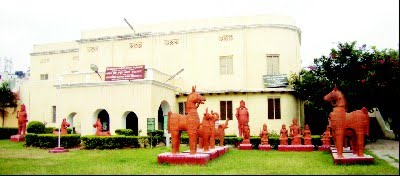
The Indira Gandhi Rashtriya Manav Sangrahalaya (IGRMS) museum in Mysore, an autonomous organization, Ministry of Culture, of Government of India, is not only a museum housing tribal artifacts, but also a visual history book depicting the evolution of tribal culture across various parts of India. It is a knowledge centre that houses numerous art works of various tribes. This unique anthropological museum though sanctioned in 2000, started functioning only from Oct. 2001. Traditional tribal art forms like paintings, terracotta’s, murals, stone sculptures and other art forms are on display here. There are a little moe than 400 ethnically different tribes in India.
The IGRMS headquarters is located in Bhopal (MP), while the Regional Centre IGRMS is in Mysore at Wellington House on Irwin Road. In an attempt to showcase the diversity and richness of our culture the Mysore IGRMS conducts various workshops, seminars, hands-on training programme, throughout the year.


The Terracotta sculpture outside the entrance to IGRMS is much more than an artistic work, it is actually narrating a mythological story of the tribals and is part of an open air exhibition called, “Janapada Kathe”, folklore stories, where each work of art on display here is narrating a story. The various art works displayed here are the creation of artists from different States, working on their local folklore stories, their songs and dances, their community deities, tattoos, myths and lore and transform-ing them into art-works. The exhibition was opened in April 2008, on the occasion of the eighth anniversary celebrations of the Sangrahalaya.
The exhibition is also a record of the folkways and mores of the tribals, their myths and legends. The striking feature of this exhibition is that all these exhibits are actual dwellings built by the tribals themselves, using the same materials and architectural style employed by them. It is for this reason the exhibits are in the open exposed to the elements of nature and is a permanent feature.
Whether it is a mural, or painting, terracotta art, stone sculptures and even photographs each of them narrate a story of local traditions and rituals practiced by the tribals of a particular region. Using these exhibits IGRMS has been successful in creating awareness among the people to many of our lost cultures and traditions. At present there are 21 exhibits, representing a particular tribe. Here is a brief introduction of them:
‘Gotul’, this castiron mural shows the communal dormitory of teenagers, both boys and girl, who are expected to live in harmony and togetherness, among the murals of Bastar in Chattis-garh. Gotul a mural cast in iron, illustrates a youth dormitory of the Muria tribal people in Bastar, Chattisgarh.
The tribal Gond painting of Mandla in Madhya Pradesh, tells you the story of the disappearance of God from the Earth, with a message that death will be sudden for all and it is the soul that goes to heaven, without the body.
Bhil paintings also from Madhya Pradesh, depicts the worshipping of their local deity, Pithora and the installation of a memory stone, ‘Gatla’. The materials used for the painting are simple homemade pigments made from the leaves and flowers of various plants. The brushes made of rags or a cotton swabs and fastened to twigs of neem. The paintings are done in a single day by the Bhils, praying for the prosperity of their lands and families and worshipping fertility.
Warli folk paintings by one of the largest tribals found in the northern outskirts of Mumbai, in Thane, Maharashtra, do not depict any mythological characters or images of deities, but depict social life, like the marriage “chauk” drawn on the walls of their dwellings using only rice paste and smeared with red ochre. It also narrates the “Tarpa” dance and celebration of “Simgha” festival.
Mural painting from Kozhikode, Kerala, tells you the story of the slaying of two demons, Nalakuvara and Manigriva, sons of Kubera by Lord Krishna as Balagopala, who tied to a stone mortar by his mother, goes crawling on his knees and the mortar gets caught between the two Arjuna trees and uproots them, thus liberating the two demons from the curse.
The story of Raja Shailesh, Reshma and Kushma has been depicted on terracotta from Dharbanga in Bihar district.


The Par or Phad paintings from Rajasthan, depicts the tradition of worshipping ancestors and historical figures. Among the five ancestors commonly worshipped in Rajasthan, the life of Devnarayan (Takhaji) and Pabuji Rathor are the most popular. He is usually pictured seated on a horse along with various animals like cows, snake. The legends are painted on long rectangular cloths usually 35 feet long by 5 feet wide for Devnarayan pars and 15 feet by 5 feet for Pabuji-ki pars.
The Subarnapur artists from Orissa, have beautifully depicted episodes from Ramyana on terracotta pots using clay coils. That is, there are not kiln-baked but sun dried. Incidents such as the birth of Seetha, the breaking of Shivadhanus, Vanavasa, Lankapuri Hanuman, Rama’s arrival to Ayodhya, Pattabhisheka are elegantly depicted on the pot.
The Vijayanagar school of paintings called Surapur paintings managed to survive in Surapur, Gulbarga. The ‘Dasoha Gnana’ painting by a Gulbarga artist narrates the history of the 12th century Sharana Basaveshwara. The sage’s entire life is narrated as a ‘pawaada’ or ‘miracle’ in the Surapur traditional paintings.
Terracotta pottery both for ritualistic prayers and everyday use have been found inn almost every archeological dig. The famous gray ware pf the Indus Valley or the Blue ware from the Harappan period are well known. The usual votive figures in the tribal hamlets of Bastar, Jhabua, Sarguja, Raigarh, and Mandla are elephants, serpents, birds and horses. Huge terracotta horses with noble-like figures are still found in several of the Tamil Nadu villages. These terracotta semi-divine deities are the guardians of the villages. Terracotta votive placed at the boundaries of the villages are also said to ward off disease. Terracotta votive placed at the boundaries of the villages are also said to ward off disease. Votive terracotta figures of Bonga Hathi, Bankura horse, Raja Hathi, Owl, Kalli Buri, Ganesh and Manasa Kalash can be seen here. Man’s primordial fear of snakes resulted in making minor deities of them. Manasa becomes the snake goddess daughter of Shiva and is worshipped in West Bengal, Assam and Orissa.
Even the Patua from Midnapur, West Bengal, narrates the story of Snake Goddess Manasa and how she wanted the people to worship her, like her father, Shiva, was worshipped.
Terracotta offerings for “Gramdev” or the village deity is a common practice among the Jhabua tribals in Madhya Pradesh. Once in twenty years, families belonging to Bhil, Bhilala, Rathwa and the Koli tribes offer a ‘Jatar’ at the shrine of Gamdev or the village deity under the saagwon or teak tree. Each of these ‘Jatar’ comprises of 120 terracotta horses, known as ‘the army of horses’.
The Cherial scroll paintings of Andhra Pradesh is truly an exciting exception, practised mainly in Cherial of Warangal district. The painting is widely used for wall decorationsThis traditional art form is inseparable part of the profession of the story telling community known as Kaki Padagollu. They utilize the scroll paintings as visual aids to tell their stories. The stories come alive by paintings on clothes, which come in the form of scrolls. Each scroll can run into several meters. However to meet the modern art lovers’ and public demand, the Nakkash or smaller versions are made at affordable prices.
An artist from Mandla, Madhya Pradesh, has beautifully narrated an interesting story about the creation of universe by Badadev.
The famous Chittara Art or Hasegode Chittara paintings done by the women of Devaara tribe in Shimoga and Uttara Kannada districts on walls and bamboo baskets. During marriages and other festivals, using only rice flour can also be seen here.
Lillari Koti of Madhya Pradesh has an interesting story. Inspired by an anthill, the Gond tribal women made the Koti, a mud granary, to store the grains safely. Snakes are depicted on the Koti, signifying that it brings health and prosperity to the family and also devours rats. Almost every member of the Gond community has a granary.

Rangoli is one of India’s oldest traditional art form. According to legends, Lord Devendra has eyes all over his body in order to be vigilant about the happenings in this universe. The innumerable eyes of Devendra are depicted in this Rangoli motif by Mysore artistes.
Stone sculptures in the manner of the Ajanta and Ellore bas-relief in black marble are well depicted by the Bidadi artists.
The tribal communities of Bastar Region consider Mohuajhad is a auspicious tree and a branch of the tree is required on all the rituals. Highly ornate votive terracotts elephants embellished with bells, figures of lion, horse, etc are offered to the shrines of village deities, these rituals of Mendka Bihav, Kham and Votive terracotta elephants and lion are well depicted by the artiste from Chattisgarh.
Artist from Pudukottai, Tamil Nadu have fabulously narrated the heroic character of Ayyanaar, the main protagonist in the local region. Ayyanaar complex developed in the exhibition consists of 12 figures Ayyannar the chief deity Pushpakala, Purnakala, Kali, Sanyasi, Nondiveeran, two horses, two elephants and two cows. Various forms of the Ayyanaar including are in ‘Policeman’s uniform can be seen in sense of the interior villages of Tirukoillur, Tamil Nadu.
All these features give the visitor a glimpse of the rural life by boosting the morale of traditional artisan groups by creating general awareness among general public.

Sunday, April 18, 2010

Filigree magic in Bamboo


Bamboo is versatile; it is used to make furniture, walls of a house, lattice-work screens to keep out the heat of the day, drinking cups, tea strainers etc. Bamboo in all its recreated glory is however to be found only in the North-East regions like Manipur, Meghalaya, Nagaland, Mizoram and Assam. It is an intrinsic part of the lives of people of these States.
More than 130 species of bamboo are found in India and most of them are grown in Manipur. And this State is considered as one of the largest producer of bamboo products after Tripura in the entire North East. Cane and bamboo craft is widely spread throughout the State. This raw material is considered to be God for these tribal artisans for it is through the manifold uses of bamboo that they earn their livelihood. The innate artistic flair of these people is seen not only in their brightly coloured shawls but also in the products created by splitting bamboo as finely as filigree.
The North East Crafts Bazaar is showcasing the talents of these extraordinary people at Bharat Scouts and Guides Grounds, Opp. DC Office, which will conclude today at 9 pm.

Speaking to SOM, Chanchelini Sharma from Manipur who is exhibiting Kouna craft, said, "Kouna is a species of water reed (firm-stemmed water or marsh plant especially of genus Phragmites). The plants grow wild in the marshy land, ponds, canals, along the river and lake beaches. From time immemorial, these stalks, locally called Kouna, after drying are being used in making mats/mattresses by the people living mostly in the valleys of the Manipur State."

"I create Kouna mats, chairs, cushion, coasters, bags etc. of different shapes and sizes with different designs which can be used for domestic and ritualistic. Now-a-days, this craft has more demand in the market and to reach the target we plant this in the marshy paddy fields, canals, along the submerged river and lake shores”, says Sharma who had done her graduation and has a keen interest in sharing this art.
Apart from Kouna items, bamboo made baskets, mats, fishing traps/tools, furniture, walk-ing stick, trays, decorative pieces like table lamp, wall hanging, ash tray, flower pot, flower and other products, flute, suitcases etc. are created by them.
These items are in different forms/designs according to the varying customs of different tribes of the State.

Little or no power supply: People at receiving end

Frequent power cuts have made life miserable for people of every strata in society. Thanks to the apathy of administrators and policy makers who have failed to make appropriate arrangements for generating adequate power, expecting the future demand.
The power problem has not only worsened the students’ life, but also commercial establishments, small scale industries located in and around the city. It is reported that thousands of migrant labourers were leaving the city as the industries are either closing down due to power cut or being not operated to full capacity.
Various consumer groups, NGOs, political parties and residents have staged protests condemning the Electricity Supply Companies for the irregular power supply. In spite of all this, the power problem is not being rectified which only shows lack of will on the part of the administration. To check out the pulse of the people, SOM spoke to several of them. Excerpts:
"In addition to the regular load shedding at fixed hours, there are random power cuts. The total power disruption in a day extends for more than 5-6 hours. This has disrupted normal lives. The government should find some solution to solve this problem. It has not taken any steps to curb wasteful usage of power in city surroundings, like bill-board lighting, ornamental illumination etc. On the other hand it is spending crores of rupees for Utsavs and Jathas. If they can spend so much money for in one day, why can’t they purchase power from neighboring States?" questions Chaya, a resident of T.K. Layout.
"We are facing lot of problems due to power cut. This has affected supply of drinking water as water supply in our locality depends on the availability of power. There is no big sump to store water here. Water scarcity causes tension among resi- dents while trying to collect water. We also fear spread of seasonal summer diseases like Diarrhoea, Cholera and Dysentery," says residents of Kesare and Naidu Nagar.
"Whenever there is power cut, we feel suffocated and perspire badly. This affects my concentration on studies. It is indeed strange that government has failed to maintain regular supply of power, a basic amenity," says Smitha, a B.Sc student.
"Various NGOs and environmental organisations are responsible for the present power problem. When the proposal for setting up a thermal power plant at Chamalapura was suggested, they held protests citing environment and related reasons and got the entire project cancelled. Where do they think power will come from without a power plant? If it had posed an environmental threat, they could have proposed another alternative site or alternate methods like nuclear or gas based power plants. Instead, the whole project was called off. In fact the National Environmental Engineering Research Institute (NEERI) has already established guidelines on how to treat the effluents generated in a coal based thermal power plant. If the concerned NGOs and environmentalists had shown the same aggressiveness in implementing the guidelines mentioned by NEERI, the project would have been completed and added extra power to our grid, at least mitigating to some extent the power crisis, which will only worsen in the future, going by the current state of affairs," says S. Sharath Chandra, Proprietor Shobha Electricals, dealer in electrical accessories.

Sunday, April 11, 2010

Learn to laugh, laugh to live


"Laughing with others is more powerful than laughing alone. Sharing laughter is one of the most effective tools for keeping relationships fresh, exciting, vital and resilient with joy. When we share laughter, it increases happiness and intimacy by binding us together," say members of Kuvempu Laughter Club.
Ha, Ha, Ha… Ho, Ho, Ho… Hee, Hee, Hee… Are you wondering what this lot of homosapiens are upto? A common enough sight that we come across in our city parks daily, either early morning or late evenings. A hectic life-style or loneliness may make us forget to laugh. We laugh when we find that everything looks rosy and bright … smiles everywhere, for laughter is contagious. Who really knows? May be it releases some chemicals in the brain. Perhaps that is why, people having discovered this secret, are gathering everywhere for laughter therapy classes. Clubs, seminars, workshops are popping up to help people put a smile on their face and lower their blood pressures at the same time.
In today’s paradoxical society, considered to be civilized, do we need to be taught to laugh, when it is a natural human instinct? A stoic face is considered a sort of mastery over human emotions even at the cost of suppressing a smile.
Though a laugh lasts only for a brief moment, it makes everyone happy, making them forget everything in that moment, even the most persistent worry and the hurting pain. It is said that a good laugh and a long sleep are the best cures in the Doctor’s book. Society zipping the fast lane has robbed us of the opportunity to laugh naturally, thereby creating a need to induce laughter artificially.
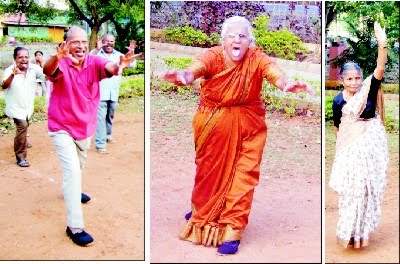
This is where the 'Laughter Clubs' come in. They teach us to laugh by creating humorous occasions and performing funny antics, apart from narrating jokes. One such club in the city is the Kuvempunagar Laughter Club which holds ‘laughter’ classes in a Park.


When SOM contacted P.S. Rajarathnam, the Laughter Club Trainer, he said, "Laughter is indeed the best medicine for all. A good laugh is like internal jogging. One minute of hearty laugh equals 45 minutes of therapeutic relaxation. We practice laughing in a group because it inspires everyone to laugh along with others, as most of us switch off our laughter as we grow old, feeling that our laughs may be inappropriate and not accepted by those around us."
"A smile a day keeps the doctor away, so our aim is to put smile back on people's faces. Laughing even has health benefits. After a good belly laugh we feel better as it boosts the immune system, lowers blood pressure, reduces stress, helps in getting good sleep and even tones up stomach muscles! It even helps stave off heart disease and prevent a heart attack," adds Rajarathnam, a retired General Manager of BHEL, who started this Club on April 3rd, 2003. Inspired by a doctor in Mumbai who started the first Laughter Club in the country, Rajarathnam started the Kuvemunagar Laughter Club with the assistance of Subbalakshmi, a Laughter Trainer from Bangalore. The club has more than 45 members. The classes are held free of cost and there is no age limit for members to enroll.
The specially designed classes are based on Pranayama, Laughter Yoga (Haasya Yoga), yoga-breathing and laughter exercises that involves breathing techniques, relaxation, meditation and stretching ex-ercises. After performing these simple laughter exercises, they walk around clapping hands shouting "Ho..Ho..Ho.. Ha…Ha..Ha" followed by "Hee..Hee…Hee” in unison. This releases tension and relaxes their bodies. One of the central ideas behind laughter therapy is behaving like a child, laughing for no reason, playing around and inventing fun, just for the sake of a good laugh.
Speaking to SOM some members of the Club joyously reported: "We feel very happy to come and spend time here. We share our sorrows and happiness and spend time together with lot of fun. We don’t want to miss classes even for a day and we never miss a chance to visit this place, even when it is raining. We do a complete body exercise which gives us immense relief. If we were to do the same exercises at home, family members would mock us, whereas here we feel comfortable to do these exercises along with others."
70 plus, still an enthusiast


Most of the members who attend this laughter class are over 50 years of age and some of them are more than even 70 years. In spite of their age they attend the classes regularly with lot of enthusiasm and involve themselves in all the exercises.

Doll Maker: Talent Unlimited


Revathi Ramaswamy is a homemaker with varied interests and dabbles in a lot of things! She is either tending to plants in her garden, creating dolls out of waste or singing and teaching bhajans in her spare time. Her creativity with dolls is well showcased during Dasara which attract a lot of visitors.
Gardening is a hobby which she pursues out of passion. She grows various kinds of flowers, fruits (including apple) and vegetables in her garden, and Revathi, a resident of Vijayanagar, is very proud of her green friends.
Indian history has a place for dolls that project rural life. Dolls act as cultural ambassadors reflecting our civilization, observes Revathi, who creates dolls out of cloth and other waste material. “The face of the dolls is available readily. The cloth body parts are stitched and stuffed with synthetic cotton, with a metal frame providing body structure. Facial features are painstakingly painted by hand. All limbs, fingers, and toes are stitched separately for a more realistic depiction of gestures. Clothing and accessories are also prepared by hand. I collect waste things and use them while making dolls. It is not simple to make a cloth doll but they have a basic simplicity and charm, which sets them apart from other dolls,” she says. Mythological characters from Mahabharata, RadhaKrishna, various forms of Lord Krishna, Durga and many other gods and goddesses have been created by her. Revathi has bagged many prizes for her Dasara doll show and gardening since three years.

Wednesday, April 7, 2010

'A sound mind in a sound body'

Exercise holds the key
"When we construct a house, we plan according to our capability. In the same way, we should plan our fitness also. One should know his/her capacity and capability before starting fitness exercises," says Dr. Hareesh, Secretary, Mysore Orthopaedic Association.
People these days are becoming more conscious about their health and about how they look and the result is that more people are flocking to fitness centres to get that dream body. Film stars sporting sculpted bodies have been an inspiration.
Contrary to common perception, it is not necessary to go to a hi-tech gym and work out on the Nautilus machine at all. A long brisk walk or yoga and even free-hand exercises are enough to stay in good condition. Dr. Hareesh, Secretary, Mysore Orthopedic Association, said that it is very vital "to go for a complete fitness training which takes care of all the aspects of keeping a body fit, beginning with proper diet and the kind of exercise that is suited to one's physiogonmy."
"Very few people know what their fitness level is and what they need to do. It is necessary to consult a physician before staring on a course of exercise particularly if one is over 50 or if one is suffering from heart-related ailments," says Dr. Hareesh.
While the doctor will tell you how much you can exercise, the fitness trainer will tell you what kind of exercise you can take up.
Regular fitness workouts will not only help you get that toned body but will also help you develop resistance to a host of illness.
Some of the benefits of a fitness regimen are: lower body weight, increased immunity to ailments, burning body fat, more stamina and more energy. Another benefit is muscle tone which means that your muscles are firmer, leaner and hard !
The young and the elderly will both benefit from an exercise regimen. Latest research has proved that even the very old can walk and do simple exercises to keep from being plagued by old-age related problems like loss of mobility. Even those suffering from chronic illnesses can significantly improve their life-style by exercising everyday.
"Exercise reduces the risk of heart disease, diabetes, colon cancer and blood pressure. People who are active have a better longevity quotient than those who are inactive. But one should also know their capacity and capability before going through all these exercises. It is always better they approach a doctor to know their capacity," says Dr. Hareesh.
Dr. Hareesh also says that exercise without a prior medical check-up may lead to exercise related injuries. Recreational sports that do not involve any major activity are safe and do not need a green signal from a physician. "Once we start fitness or exercise reghimen, intensity is very important, it has to be gradually increased and the body should get toned up for the exercise. Patients suffering from arthritis or weak bones should avoid jogging and other strain-inducing exercise and follow light exercise. Crash dieting is not good and neither should one use magnetic belts," he added.
"Before starting any exercise, warming up for minimum of five minutes is very much necessary, which can be achieved with moderate continuous movement as in walking, slow jogging or bicycling. The aim is to increase blood circulation and prepare the muscles for stretching. Similarly after ending the exercise routine, one should not forget to do warm-down exercise which is just like warming up exercises," added Dr. Hareesh.
He also says that the best all-round exercise is swimming along with yoga and pranayama. One can have an improved respiratory capacity and muscle tone.
"Through regular exercise one can reduce the weight, blood pressure, sugar level and cholesterol. One should devote at least 150 minutes per week to keep themselves fit. Each day through brisk walking or just walking one can lessen 3 to 5 calories and before doing or going to any sort or exercise."
Exercise helps not only the body but also the mind. It helps in keeping mental equanimity besides lessening the chances of cardiac problems, reducing the symptoms of menopause and keeps a check on cholesterol, says Dr. Hareesh.
If the aim is to have a fit body and not a heavily muscled one then ordinary free-hand exercise will do. In fact yoga in its different forms like Power Yoga or Dynamic Yoga are just as good for getting that lean toned body and glowing inner glow.
One important benefit of exercising regularly will be a reduced medical bill or in many cases no medical expenses at all! A good toned body enhances one's self-esteem leading to better mental health. In fact little or no recreational activity may lead one to drugs and anti-social activity.